


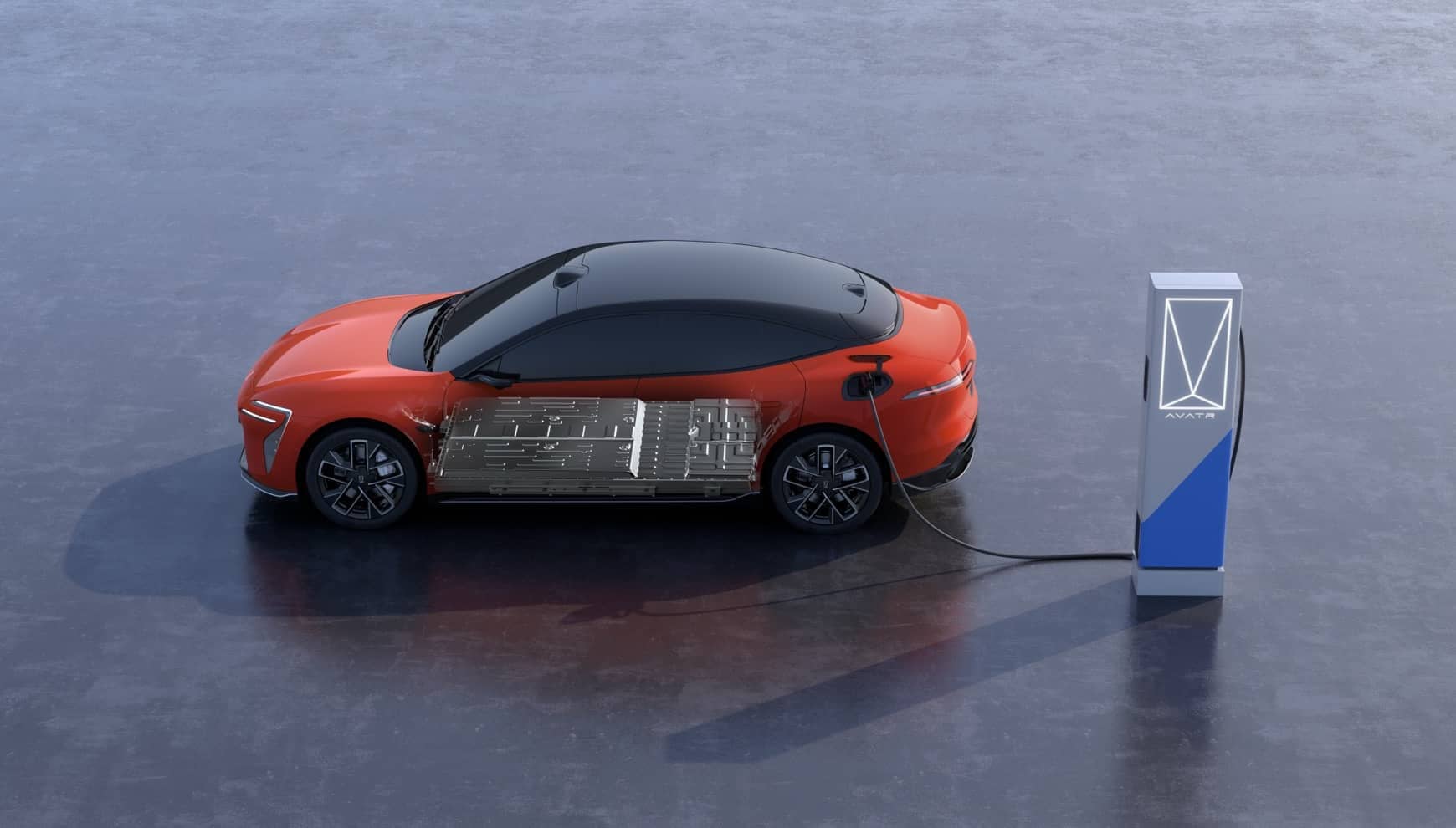
The battery of a used car: how we check its condition before you buy
On an electric car, the battery is half the value. What state of health means, how it is read, what the history report says, and why 10,000 km is no cause for worry.
- mileage of our cars
- 500–15,000 km
- typical health at that mileage
- >97 %
- in AVATRs, the largest maker
- CATL
When you buy a used petrol car, you look at the engine. When you buy an electric one, you look at the battery: it is the most expensive part, the only one that certainly ages, and the one sellers talk about least. Here is how we look at it, and what you should ask of anyone selling you one.
What "state of health" means
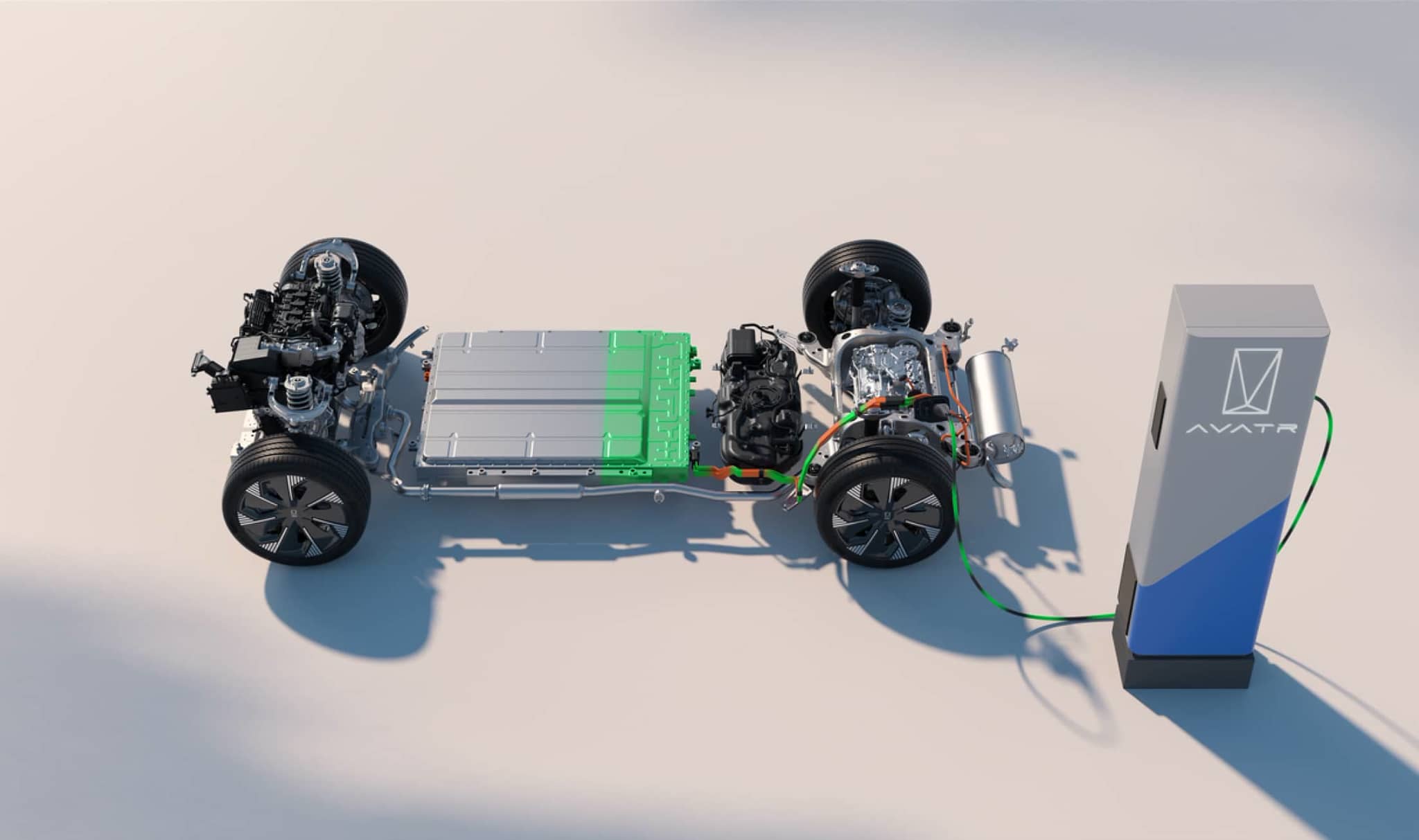
A battery loses capacity with time and with charging cycles. State of health — SOH — is its capacity now against its capacity when new, as a percentage. A new battery is at 100%. One with 10,000 km is usually above 97%. Degradation is faster in the first year and then settles; a good battery loses a few per cent over the first years, not tens.
What SOH does not tell you: whether the cells are balanced with each other. A battery at 96% with one cell at 88% is a problem that only shows up in diagnostics, not in the headline figure.
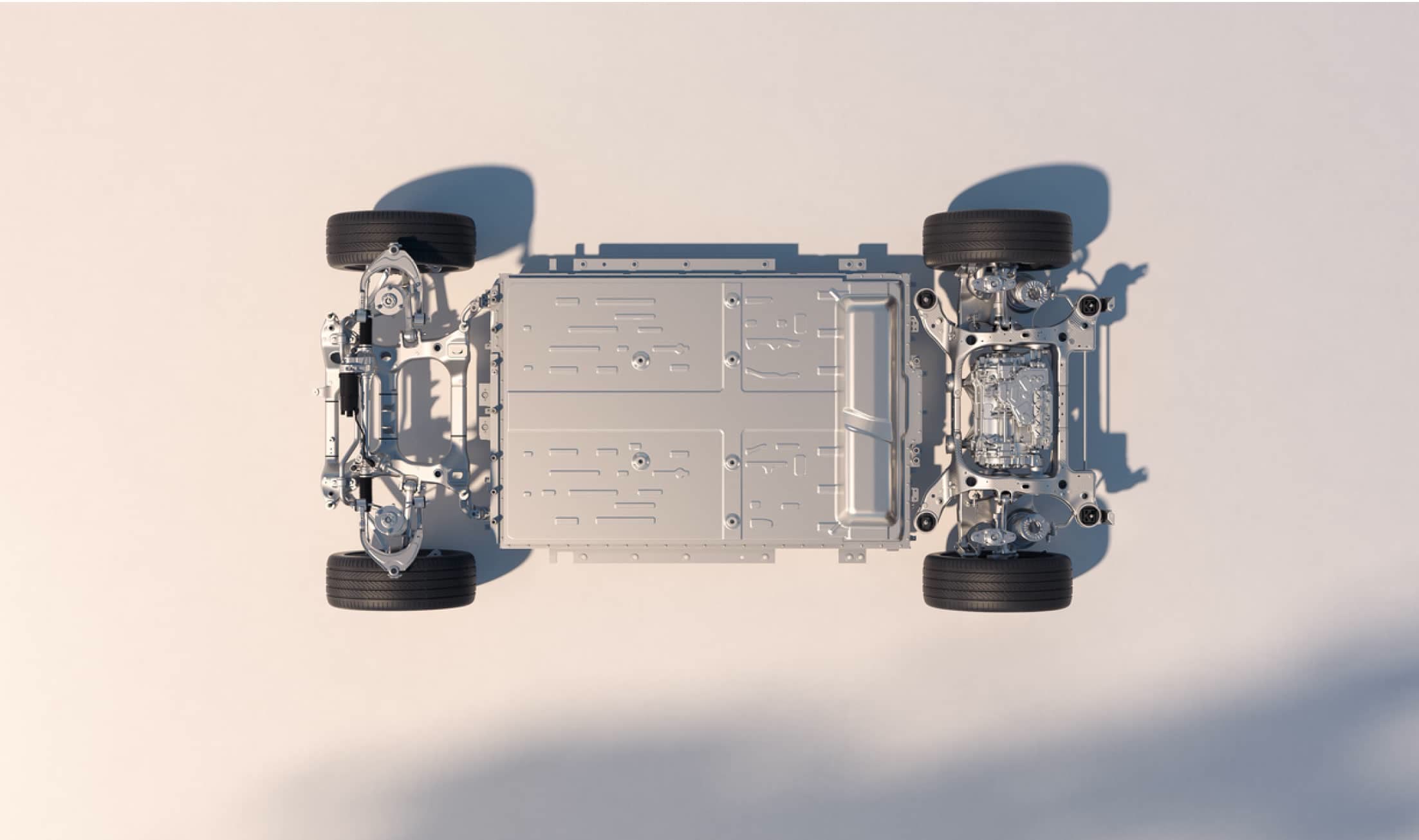
How we read it
1. From the history report. The Chaboshi report includes battery data from the manufacturer's network: capacity, cycles, alarms, interventions. That is the first reading, and you get it before you pay. If the report shows a module replacement or a temperature alarm, the car does not go on the list.
2. From the car. On collection, a partner workshop reads the battery with a diagnostic tool: SOH, cell balance, temperatures, fast-charging history, internal resistance. If the figure differs from the report, we do not take the car.
3. From how it behaves. A test drive from 80% down to 20% says more than any figure: real consumption, how it holds voltage under load, whether messages appear, how warm it gets on a fast charge.
What matters more than the kilometres
- How many fast charges it has had. High-power charging heats the battery; many fast charges in a row tire it faster than the kilometres themselves. The report counts them.
- How it was kept. A battery parked for months at 100% or at 0% suffers. The report shows periods of disuse.
- The chemistry. LFP (lithium iron phosphate) batteries tolerate daily charging to 100% and last longer; NMC cells have higher density but prefer 20–80%. We state the chemistry on every spec sheet.
- The climate. A car that spent two years in Guangzhou at 35 degrees has tired its battery more than one from Beijing. The report shows the region.

Why 10,000 km is not a problem
A battery maker typically guarantees 70% capacity after 8 years or 160,000 km. At 10,000 km, the battery is in the first per cent of its life. The first drop in the car's value — the brutal one — was paid by the first owner; the battery, meanwhile, is practically the same. Why lightly used rather than new.
How to look after the battery afterwards
- Charge at home, slowly, when you can. Fast, when you must.
- Keep it between 20 and 80% on ordinary days; 100% only before a long trip. On LFP, 100% is fine.
- Do not leave it for weeks at 0% or at 100%.
- In winter, precondition the battery from the app before a fast charge — it charges faster and tires less.
What we cannot promise
That the battery will never fail. Nobody can. What we can do is give you its real figure before you hand over money, and not sell you a car whose figure we do not like ourselves.
Is there something the article did not settle? Write to us; we answer with figures, not with "it depends".