

Charging in Romania: sockets, stations, and what works on cars from China
Cars from China arrive with a Chinese charging port. What that means, how it is dealt with, where you charge at home and on the road, and what charging power you actually get at Romanian stations.
- the Chinese standard
- GB/T
- the European standard
- CCS2
- at home, three-phase, typical
- 11 kW
The first technical question we get after the price: "will it charge at our stations?" Yes. But the road to that yes is worth explaining, because it is where hurried importers leave the buyer with a car that can only be charged at home.
The charging port
In China the standard is GB/T: one connector for alternating current and one for direct current, both different from the European ones. In Europe the standard is CCS2 — a single connector covering both. A car imported from China with its original port will not plug into any public station here.
The fix: an adapter or replacing the port. A GB/T to CCS2 adapter is a certified part that goes between the cable and the car; it works, but it is something to carry around and, on direct current, it sometimes limits the power. Replacing the port with a CCS2 one is done at a specialist workshop and is what we recommend on the cars we import — once, permanently. The quote says which option your car has.

At home
With a three-phase supply and an 11 kW wall box, a 90 kWh battery fills overnight from 20% to 100%. On an ordinary 230 V socket, with the cable supplied, the same battery needs over a day — fine for commuting, not for a holiday. A wall box costs from a few hundred euros plus installation; it is the best investment you will make after the car.
What to know before you call the electrician: whether you have three-phase or single-phase (new blocks of flats usually do, older houses do not), what power your contract allows, and that an 11 kW box needs a dedicated 16 A circuit on three phases. On single-phase you are limited to 3.7–7 kW — still enough for a night from 40%.
On the road
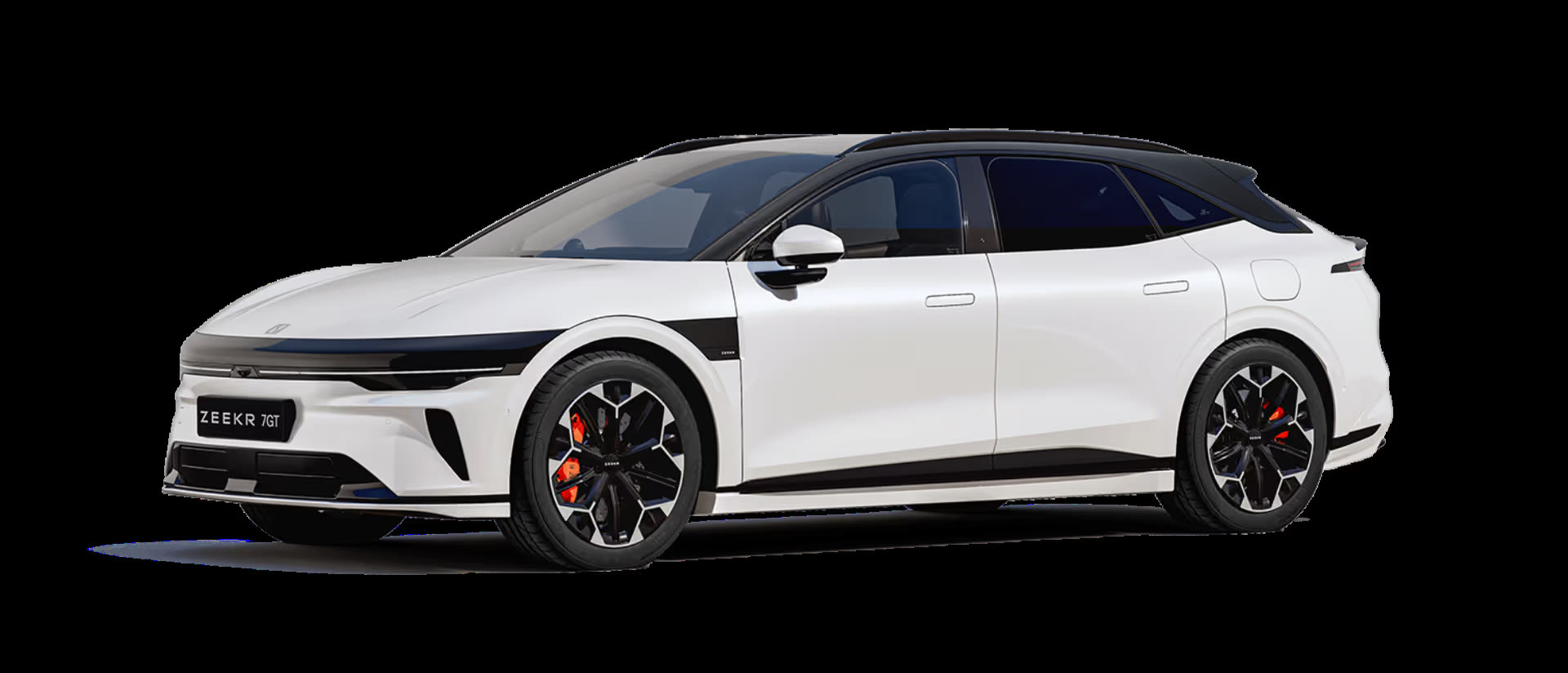
Romania has fast chargers (50–350 kW) on every motorway and in the larger cities, through networks such as Renovatio, Eldrive, MOL, OMV Petrom and Ionity. With CCS2 on the car, all of them work. The real charging power depends on the car and on battery temperature: a car with an 800 V architecture, as ZEEKR has, can take 200 kW or more at a station that offers it; a 400 V car usually stops at 100–150 kW. In winter, a cold battery charges more slowly until it warms up.
A simple rule for a long trip: charge from 10–20% up to 80%, not to 100%. The last 20% takes as long as the first 60, on any car, because the battery slows the charge down to protect itself.
Paying
The network apps, or an RFID card. You need nothing from the manufacturer: charging does not go through the car's Chinese account. The only features that may depend on servers in China are navigation and the voice assistant — more about those here.
What we check
On every car: which port it has, whether the adapter or the CCS2 port is fitted and certified, and the maximum power it accepts on direct and alternating current. The figures are on the car's spec sheet, and at handover we charge together at a public station, so you can see that it works — and so you know which buttons to press.
Is there something the article did not settle? Write to us; we answer with figures, not with "it depends".